

Understanding the legacy application
Agents analyzed the legacy application’s screens, routes, APIs, database, permissions, reports, and business rules to create a migration map that identified what needed to be preserved, redesigned, or retired.

A decade-old operational platform was migrated to Angular 21, .NET 10, and SQL Server while expanding its capabilities with CRM, budgeting, staffing, workload planning, and margin visibility. Delivered in just two weeks through agentic workflows and human direction, the modernization achieved months’ worth of work without compromising quality, security, or consistency.
Time Tracker is a core operational platform connecting time, projects, teams, clients, reporting, and financial planning.
Its modernization required simultaneous migrations from AngularJS, a custom backend architecture, and MySQL, while preserving critical workflows and improving security, architecture, responsiveness, consistency, and reliability.
The main challenge was not rewriting screens, but recovering years of product knowledge and safely carrying it into a new architecture.

Agents analyzed the legacy application’s screens, routes, APIs, database, permissions, reports, and business rules to create a migration map that identified what needed to be preserved, redesigned, or retired.
Focused skills captured Paradigm UI and Paradigm.Enterprise architecture and implementation patterns, using progressive discovery to provide agents with the right level of guidance while maintaining consistency across the application.
Each capability was delivered as a complete vertical slice across database, backend, API, frontend, and tests, with people defining product, architecture, security, and experience while agents handled discovery, implementation, review, testing, and documentation.
Independent agents reviewed implementations for architectural, security, testing, and interaction issues, while browser-testing agents validated the running application across real scenarios. Reusable findings were incorporated into skills and automated checks.
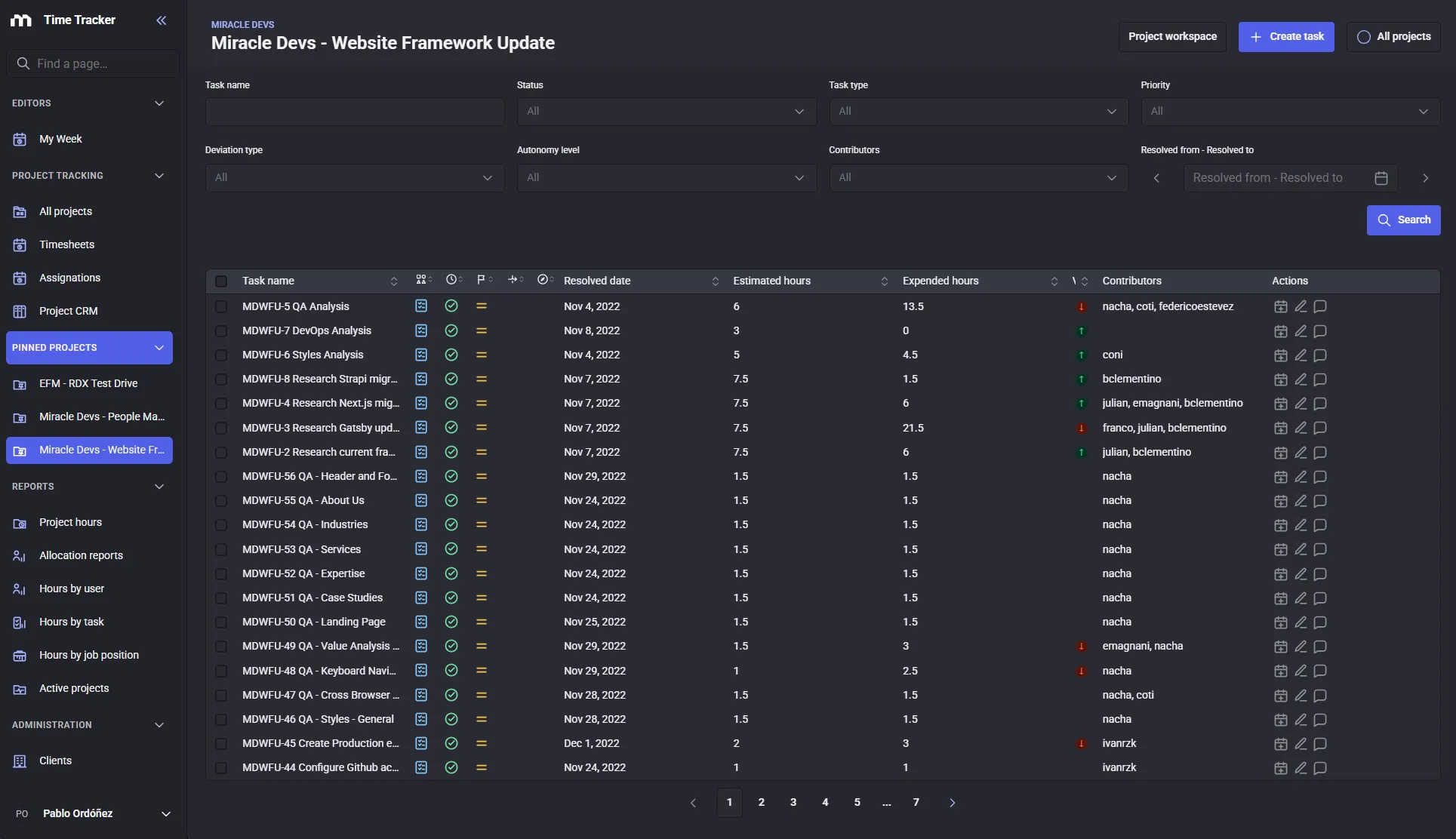
Generation, formatting, analysis, builds, tests, and verification were turned into deterministic commands and quality gates, allowing agents to focus on analysis and product decisions while making each new capability faster and more reliable.
The acceleration came from treating agentic development as an engineering system rather than a sequence of isolated prompts.
Studying the legacy code and creating focused skills guided the implementation. Independent reviews, testing, and automated quality gates validated each change, while new findings were fed back into the process. This feedback loop allowed knowledge to compound, making each stage faster and more reliable than the previous one.
Too much skills and context can kill your project. Designing the skill set with progressive discovery in mind, kept agent context focused, while evolving skills captured new rules and lessons throughout the implementation. Independent reviews and browser testing improved quality across security, accessibility, responsiveness, and consistency. The greatest long-term gains came from automation, turning recurring requirements into reusable generators, tests, and quality checks for both people and agents.
“The breakthrough came from turning our architecture and engineering standards into executable guidance. Once the agents understood how we build software, they could migrate, test, review, and improve each capability with remarkable consistency. We discovered that our old practices of documentation and framework-making were critical for the success of the project.”
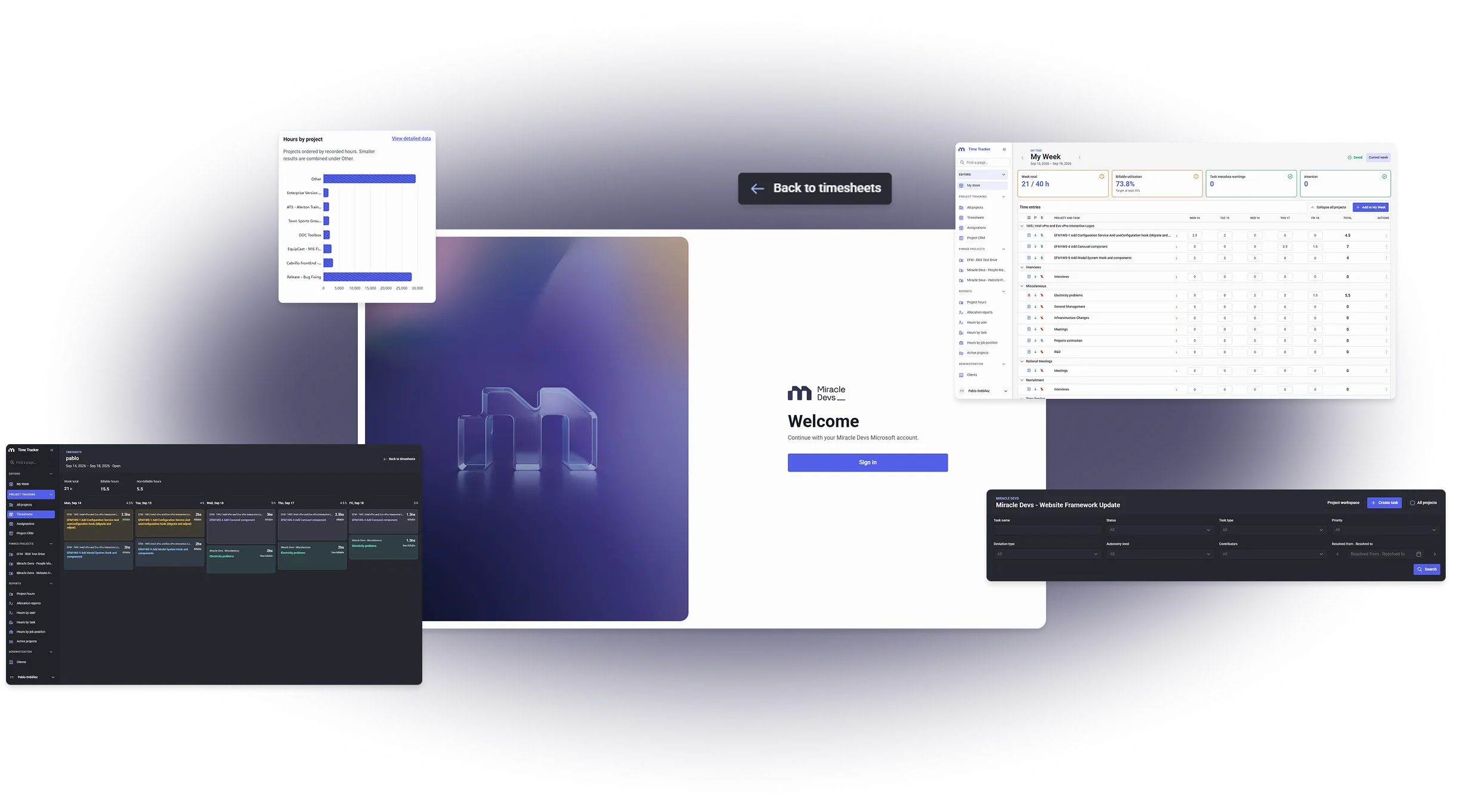
The result is more than a technology upgrade. Time Tracker now has stronger security boundaries, clearer architecture, better visual consistency, responsive workflows, repeatable database and code generation, and automated checks across the delivery lifecycle.
The project also created a reusable agentic engineering system. Its skills, reviewer workflows, browser-testing practices, hooks, and quality gates can accelerate future Paradigm applications instead of being discarded when the migration ends.
The migration became a new way of building.
Time Tracker began as a modernization project and became proof that agentic delivery can be fast, rigorous, and repeatable.
The knowledge gained during the project is now part of how Miracle Devs builds software. What could your next several-month project become?
 next case
Have a project in mind? Let's build something miraculous together. Reach out for a free consultation.